Psoriasis and atopic eczema in the SCE: everyday dermatology you cannot drop
High-yield psoriasis and atopic eczema revision for the UK Dermatology SCE: clinical variants, PASI and severity thresholds, management ladders, drug monitoring and classic traps.
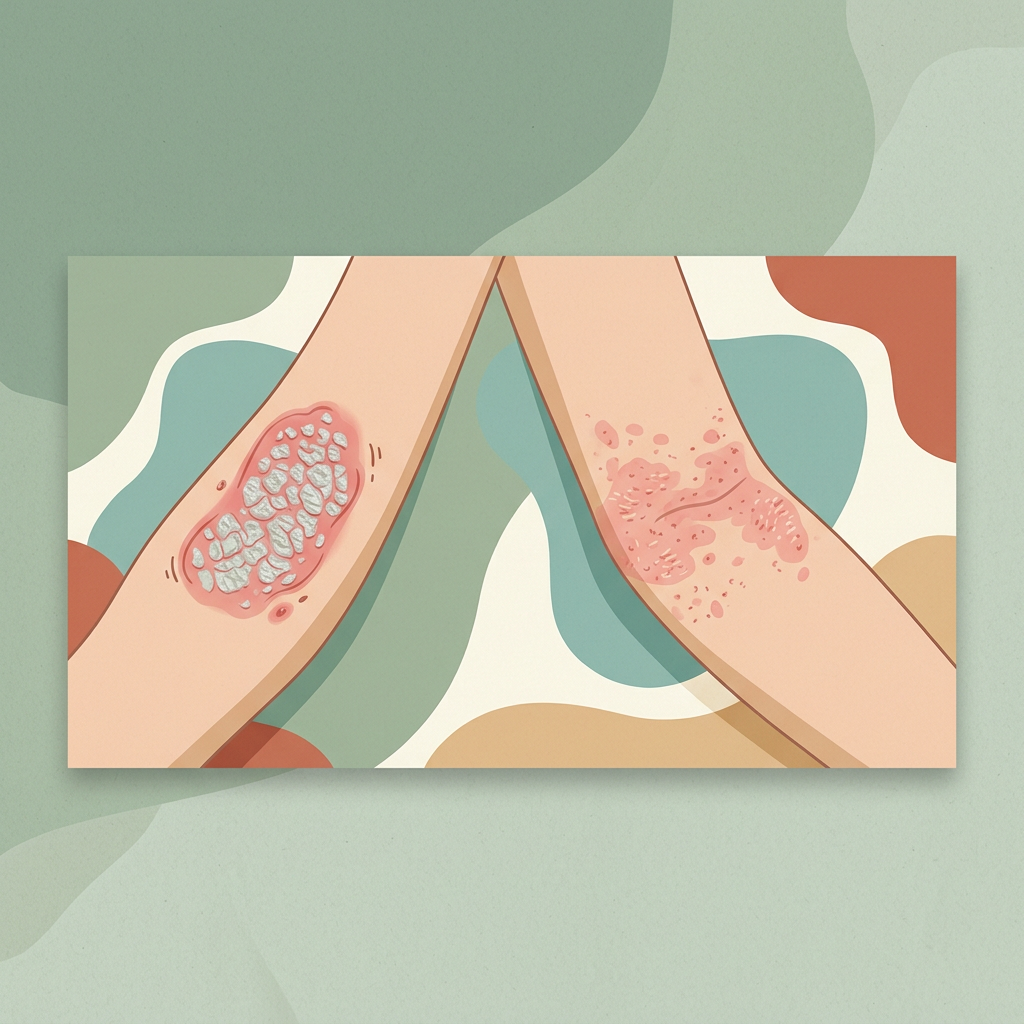
Between them, psoriasis and atopic eczema account for a large share of everyday dermatology, and of the SCE. The exam does not test obscure nuances here; it tests whether you know the variants, the severity thresholds that unlock each treatment tier, and the monitoring rules that keep patients safe. That is exactly what this guide covers.
Psoriasis: recognise every variant
- Chronic plaque, well-demarcated scaly plaques on extensor elbows, knees, scalp and sacrum; Koebner phenomenon (lesions at sites of trauma); Auspitz sign (pinpoint bleeding when scale is lifted).
- Guttate, drop-like small papules erupting 2–3 weeks after a streptococcal sore throat, usually in younger patients; often self-limiting but can herald chronic disease.
- Flexural (inverse), smooth, glazed, non-scaly plaques in the axillae, groin and inframammary folds; scale is lost to maceration.
- Generalised pustular psoriasis, sheets of sterile pustules with fever and systemic upset; a dermatological emergency.
- Erythrodermic psoriasis, near-total body erythema; an emergency because of thermoregulation failure, fluid loss and high-output cardiac strain.
- Nail disease, pitting, onycholysis, oil-drop (salmon) patches and subungual hyperkeratosis; a marker of psoriatic arthritis risk.
Severity: the numbers the exam wants
PASI combines erythema, induration and scaling weighted by area across four body regions, scoring 0–72; PASI 75 means a 75% improvement and is the endpoint trials and NICE biologic criteria quote. The practical gateway to systemic therapy is moderate-to-severe disease, think body surface area above 10% or DLQI above 10, with PASI thresholds layered into biologic eligibility. Always screen for joint disease (the PEST questionnaire), missing psoriatic arthritis is a classic exam and clinical failure.
Psoriasis management ladder
The ladder is the exam's spine: topical therapy first (vitamin D analogues alone or combined with a potent corticosteroid; coal tar; dithranol), then phototherapy (narrowband UVB first line, PUVA second), then conventional systemics, then biologics. Know where each rung starts and what pushes a patient up it.
Conventional systemics are tested through their monitoring: methotrexate is given once weekly with folic acid, is teratogenic, and needs FBC and LFT monitoring (liver fibrosis is the long-term concern); ciclosporin causes hypertension and nephrotoxicity, so blood pressure and creatinine are monitored; acitretin is teratogenic, pregnancy must be avoided for 3 years after stopping, and raises lipids while causing near-universal cheilitis. Fumaric acid esters cause flushing and lymphopenia. For the biologic tier itself, see our dedicated biologics and JAK inhibitors guide.
Atopic eczema: diagnose by the criteria
The UK Working Party diagnostic criteria require itchy skin plus at least three of five: a history of flexural involvement; a personal history of asthma or hay fever (or, in a child under 4, atopic disease in a first-degree relative); a history of generalised dry skin in the past year; visible flexural dermatitis today; and onset before the age of 2 (a criterion not applied in children under 4). Filaggrin mutations underpin the barrier defect (and also cause ichthyosis vulgaris, a favourite pairing). Severity is tracked with EASI and POEM.
Management starts with generous leave-on emollients for everyone. Topical corticosteroids are matched to site and age, face and flexures get mild-to-moderate potency. Topical calcineurin inhibitors (tacrolimus, pimecrolimus) are the steroid-sparing answer for the face and flexures: no skin atrophy, with initial stinging as the expected trade-off. Add wet wraps, treat infection early, step up to phototherapy, then to systemics: ciclosporin, off-label methotrexate, and the NICE-approved targeted therapies, dupilumab and tralokinumab (biologics) and upadacitinib and abrocitinib (JAK inhibitors) for moderate-to-severe disease.
How to revise the everyday topics
Drill the thresholds and monitoring rules until they are reflexes, that is where the marks are. Pair this guide with our biologics and JAK inhibitors post for the systemic tier and our paediatric dermatology post for eczema in children.
Put it into practice: work through psoriasis and eczema questions in the Derm SCE question bank, exam-style SBAs with fully referenced explanations.
Sources & further reading
- Psoriasis: assessment and management (CG153) - NICE
- Dupilumab for moderate-to-severe atopic dermatitis (TA534) - NICE
- Psoriasis - DermNet NZ
- Atopic dermatitis - DermNet NZ
- Eczema herpeticum - DermNet NZ
For educational use only. Check current official guidance.
Start 25 free questions